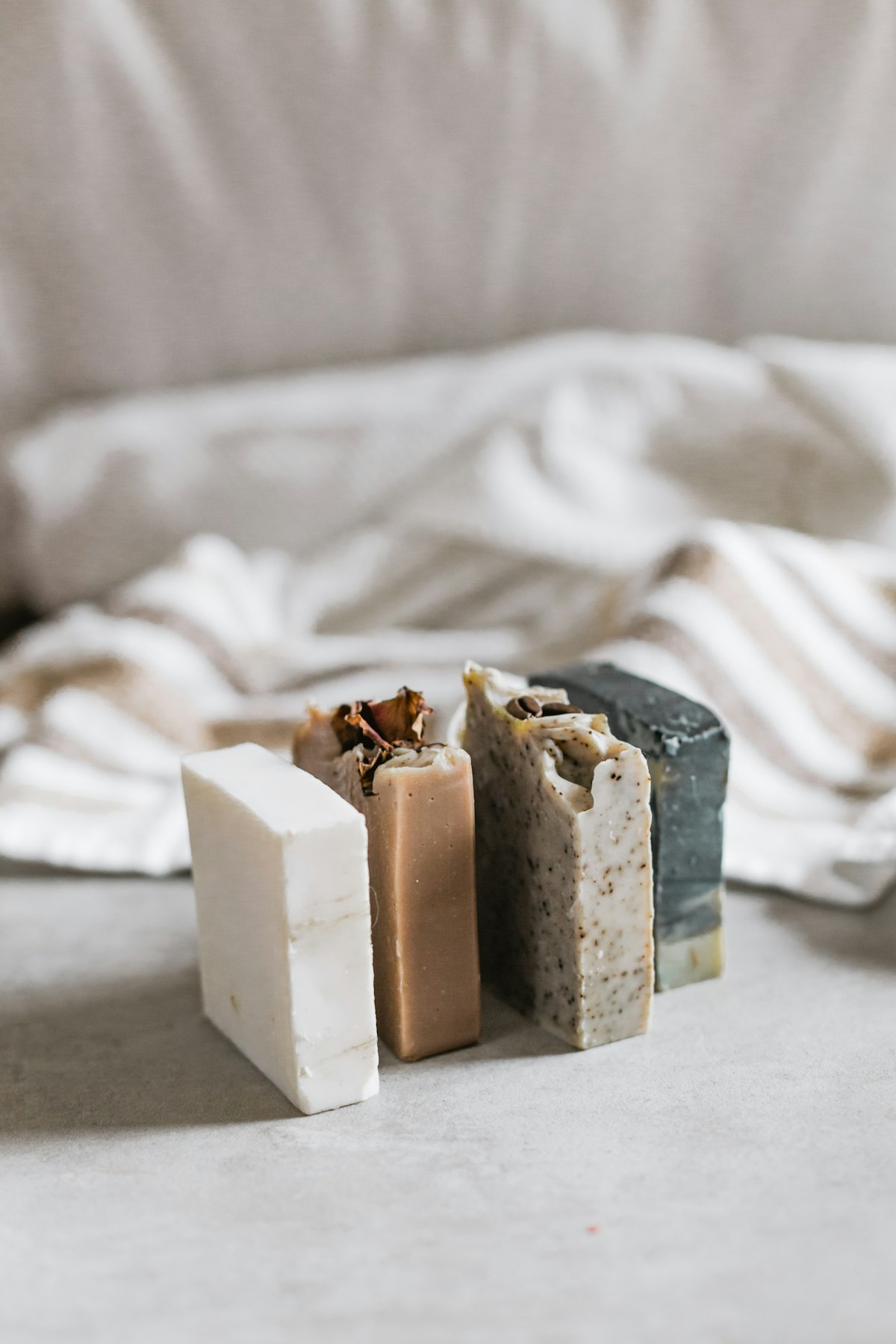
Cold-process soap making is one of the oldest methods of producing bar soap, dating back thousands of years to ancient Babylon. Unlike commercial soap manufacturing which uses high heat and strips out the naturally occurring glycerin, cold-process relies on a gentle chemical reaction between fats and lye that preserves the beneficial properties of every oil in the recipe.
At Bramble & Basin, this method is the foundation of everything we produce. Here is a look at how each bar comes together, from raw ingredients to the finished product on your shelf.
Understanding Saponification
Saponification is the chemical reaction that turns oils and sodium hydroxide (lye) into soap and glycerin. When these two components are mixed at the right temperature and ratio, the lye breaks the fatty acid chains in the oils, reorganising them into soap molecules. The glycerin produced during this reaction remains within the bar, acting as a natural humectant that draws moisture to your skin.
This reaction generates its own heat, which is why temperature control matters throughout the process. Too hot and the soap can crack or develop air pockets. Too cool and it may not saponify completely, leaving unreacted lye in the finished bar.
Choosing the Oils
Every soap recipe starts with a careful balance of oils, each contributing specific properties to the finished bar. At Bramble & Basin, our base recipe uses three primary oils in varying proportions depending on the soap variety.
Olive oil forms the backbone of most recipes, typically comprising 40-50% of the total fat content. It produces a mild, conditioning bar with small, creamy bubbles. On its own, olive oil creates an incredibly gentle soap (known as Castile soap), though the lather can feel somewhat slimy to those accustomed to commercial products.
Coconut oil adds cleansing power and large, fluffy bubbles. We keep it to around 20-25% of the recipe because higher percentages can be drying for sensitive skin. The lauric acid in coconut oil is what gives handmade soap its satisfying lather.
Shea butter rounds out our formulation, adding hardness, creaminess, and moisturising properties. At 15-20% of the recipe, it contributes to the smooth, almost silky feel that distinguishes our bars from those made with simpler recipes.
The Making Process
On making day, the workshop smells faintly of olive oil and whatever essential oils are planned for that batch. The process takes about two hours of active work for a standard batch of 40-50 bars.
First, we measure the lye and water separately, then combine them outdoors where the fumes can dissipate safely. The lye solution heats up dramatically, reaching around 90 degrees Celsius, so it needs time to cool while we prepare the oils.
The solid fats (coconut oil and shea butter) are melted gently in a large stainless steel pot, then combined with the room-temperature olive oil. Both the lye solution and the oil mixture need to reach roughly the same temperature, usually around 38-43 degrees Celsius, before they can be combined.
Once combined, we blend with an immersion blender until the mixture reaches "trace," a term soap makers use to describe the point where the batter thickens enough that drizzled lines remain visible on the surface. Light trace resembles thin custard; medium trace is more like cake batter.
Adding Character
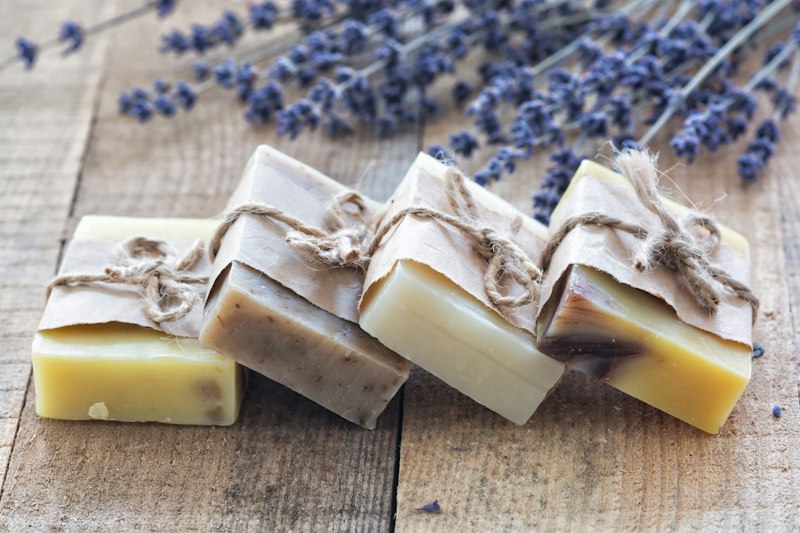
At trace, the essential oils and natural additives go in. This is where each variety gets its identity. For our Lavender & Oat bar, we fold in English lavender essential oil and finely ground colloidal oats. For the Charcoal & Tea Tree, activated bamboo charcoal gives the bar its dramatic black colour while tea tree oil adds its distinctive medicinal scent.
Natural colourants like clay, turmeric, spirulina, and cocoa powder create visual interest without synthetic dyes. We occasionally use a technique called "in the pot swirl" where two differently coloured portions of batter are loosely combined before pouring, creating organic marble patterns unique to each batch.
Moulding and Cutting
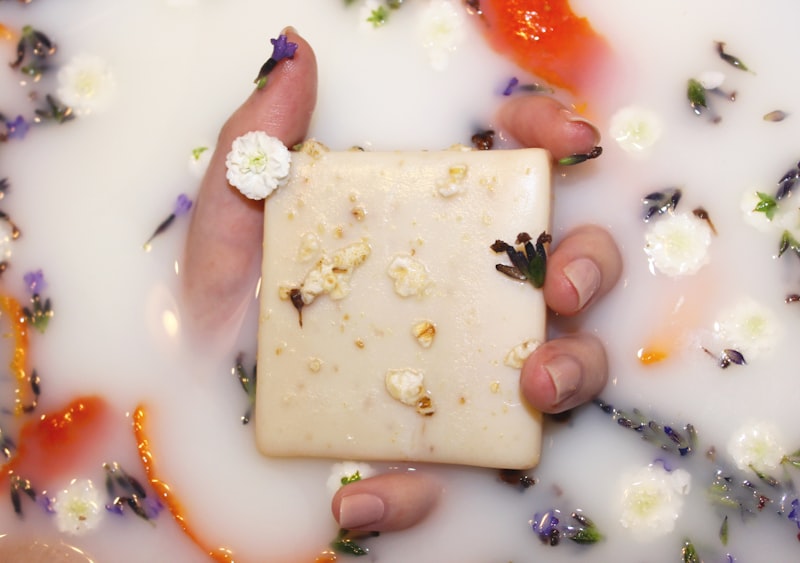
The finished batter is poured into wooden moulds lined with silicone, then insulated with towels and left undisturbed for 24-48 hours. During this time, saponification continues and the soap goes through a "gel phase" where it heats up internally, intensifying colours and speeding the chemical reaction.
After unmoulding, the soap log is firm enough to handle but still slightly soft. We cut each log into individual bars using a wire cutter that produces clean, even slices. Each bar is stamped with our mark, then placed on curing racks in a well-ventilated room.
The Cure
Curing is where patience becomes the most important ingredient. For a minimum of six weeks, the bars sit on open racks, turned weekly to ensure even air exposure on all sides. During this time, excess water evaporates, the crystal structure of the soap develops, and the bar becomes harder, milder, and longer lasting.
Some soap makers sell after four weeks. We find that six weeks produces a noticeably better bar, with improved lather and a firmness that means each bar outlasts shorter-cured alternatives by at least a week of daily use.
Our Castile-style bars, which are predominantly olive oil, cure for a full twelve weeks. High-olive soaps develop an almost waxy, incredibly gentle character with extended curing that cannot be rushed.
Why Cold-Process Differs from Commercial Soap
Most bars sold in supermarkets are not technically soap at all. They are synthetic detergent bars (syndet bars) made from petroleum-derived surfactants. Those that are genuine soap have typically been through a commercial process that extracts the glycerin for sale to the cosmetics industry, leaving behind a harsher product that requires added moisturisers to compensate.
Cold-process soap retains all its natural glycerin, which is why many people with sensitive or dry skin find handmade soap more comfortable than commercial alternatives. The trade-off is a shorter shelf life (we recommend using within 12 months) and the need for proper storage between uses, ideally on a draining soap dish that allows the bar to dry completely.
If you have been using commercial products your entire life, there can be a brief adjustment period when switching to handmade soap. Your skin may feel different for the first week as it adapts to a product that cleans without stripping. Most people report softer, less reactive skin within two to three weeks of consistent use.